4 Teaching Tips for Your First Music Lessons of the Year
We know – you’re prepping for the first week of school and you’re ready to dig into all the fun songs and activities of the new year. However, to help the year run smoothly, it’s important you spend the first couple lessons focused on routines and predictable activities. Students learn what to expect, and you spend less time redirecting behavior and more time making music. Spend time now to save time later.
Here are five simple teaching tips that can make your first music lessons of the year run smoothly.
1. Start Every Class with the Same Welcome Routine
A consistent welcome routine helps students settle in quickly and gives them immediate success.
Your routine might include:
- A greeting song (Bonus if it is a song that helps you learn names!)
- Rhythm patterns (Echo for the littles and flashcards for older students)
- Walk directly to their assigned spot (quietly or while singing a song)
- A question of the day or instrument picture of the day
- Review music rules (Read behavior expectations off a poster or slide.)
The specific activity doesn’t matter as much as the consistency. When students know exactly what happens first, transitions become easier from day one.
2. Teach Through Games Instead of Long Explanations
During the first week, attention spans can be short.
Instead of spending several minutes explaining expectations, teach them through activities and games. Practice stop-and-go signals, listening skills, personal space, and movement expectations while students are actively engaged.
Students remember what they do much better than what they hear.
3. Include Movement in Every Lesson
After sitting in classrooms for much of the day, students need opportunities to move.
Simple ideas include:
- Move in your bubble
- Marching or beat walking (start in a line before advancing to free movement)
- Freeze dance (while reviewing fast/slow, different instruments or genres)
- Action songs
- Comparative movement (high/low, fast/slow)
Movement keeps students engaged and gives you a natural way to observe how they follow directions.
4. End with a Consistent Closing Routine
Just like a welcome routine, a closing routine helps students know what to expect.
You might:
- Review what was learned (Ask “what is one way we were musicians today?”)
- Sing a few simple patterns like “s-m-d” then students echo back
- Sing a goodbye song or line-up song
- Silent line-up challenge
Some of these activities can be done after students line up while waiting for their classroom teacher to collect them. A predictable ending helps classes leave calmly and sets you up for success with the next group.
Final Thoughts
Music lessons for the first weeks of school do not have to be complicated. Focus on simple music-making, clear routines, and positive relationships. When students know what to expect and feel successful from the start, you create a strong foundation for the rest of the year in the music room.
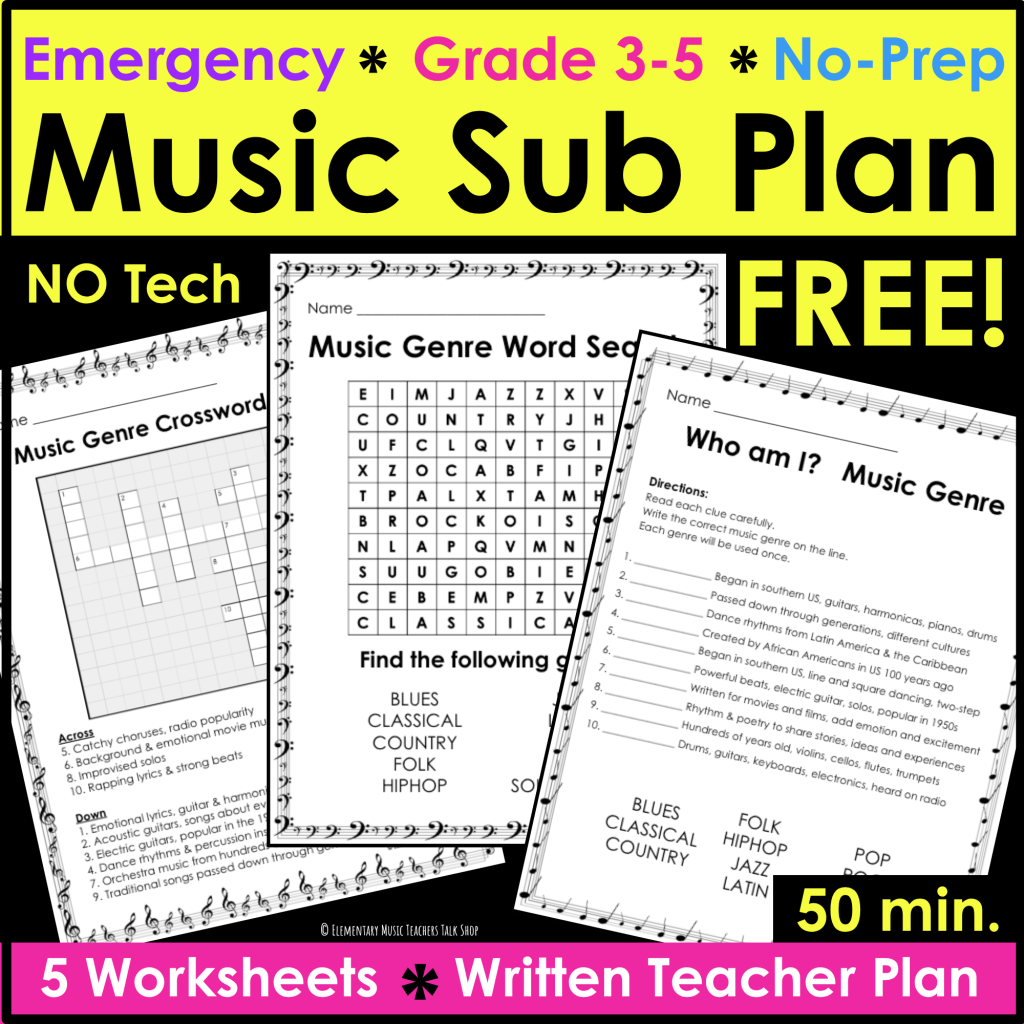
Need an emergency Sub Plan for an unexpected address? This FREE plan works any time of year with ANY sub – no music experience required! Grab the sub plan FREE here!