Easy Vocal Exploration Activities for Preschool, Kindergarten, and First Grade
Vocal exploration is an important part of early childhood music education. Before young students are ready to match pitches and sing songs accurately, they need opportunities to experiment with their voices. Sliding, swooping, making silly sounds, and exploring high and low pitches all help children discover what their voices can do.
The good news is that vocal exploration doesn’t have to be complicated! Many activities take less than a minute, require little or no preparation, and can easily be added to the beginning of a music lesson. Here are some fun ideas to sprinkle into your lessons.
7 Easy Vocal Exploration Activities to Try
1. String Shapes
Give each student a piece of yarn or string and have them arrange it into a squiggly line, hill, loop, or other shape on the floor. Students use their voices to follow the shape, sliding higher when the line goes up and lower when it goes down. Have students change their string shapes and try again, or let a partner sing the shape they created. This is a simple way to connect visual movement with vocal pitch exploration.
2. Vocal Popcorn
Pretend the classroom is a giant popcorn popper and students are the popcorn kernels! Have students make short, light “pop” sounds at different pitches, beginning with a few scattered pops and gradually adding more. Point high or low to encourage students to explore different pitches, then bring the popping to a stop when all the imaginary popcorn is ready. This is a fun, no-prep activity that encourages students to experiment with their voices.

3. I Had a Rooster
The traditional song I Had a Rooster is a fun way to incorporate animal sounds into vocal exploration. As students learn the song, encourage them to experiment with the sounds made by each animal, exploring different pitches and vocal qualities. Use these free song cards to help students remember which animal comes next, especially with younger classes. Jill Trinka’s recording of the song is fun option for introducing or reviewing the music.
4. Follow My Hand
This activity requires absolutely no preparation and can be used anytime you have an extra minute! Hold your hand in front of the class and have students make a gentle “oooo” sound as they follow its movement. Raise your hand to make their voices go higher, lower it to make their voices go lower, and move it in circles or waves for different vocal patterns. Once students understand the activity, invite a student to lead the class.
5. Slide Whistle Echoes
A slide whistle is a great tool for demonstrating how pitches move higher and lower. Play a short pattern on the slide whistle and have students imitate it with their voices, using an “oo” or “wee” sound. Begin with simple upward and downward slides before trying more interesting patterns. Students can also take turns suggesting whether the next sound should go up, down, or both.

6. Vocal Exploration Cards
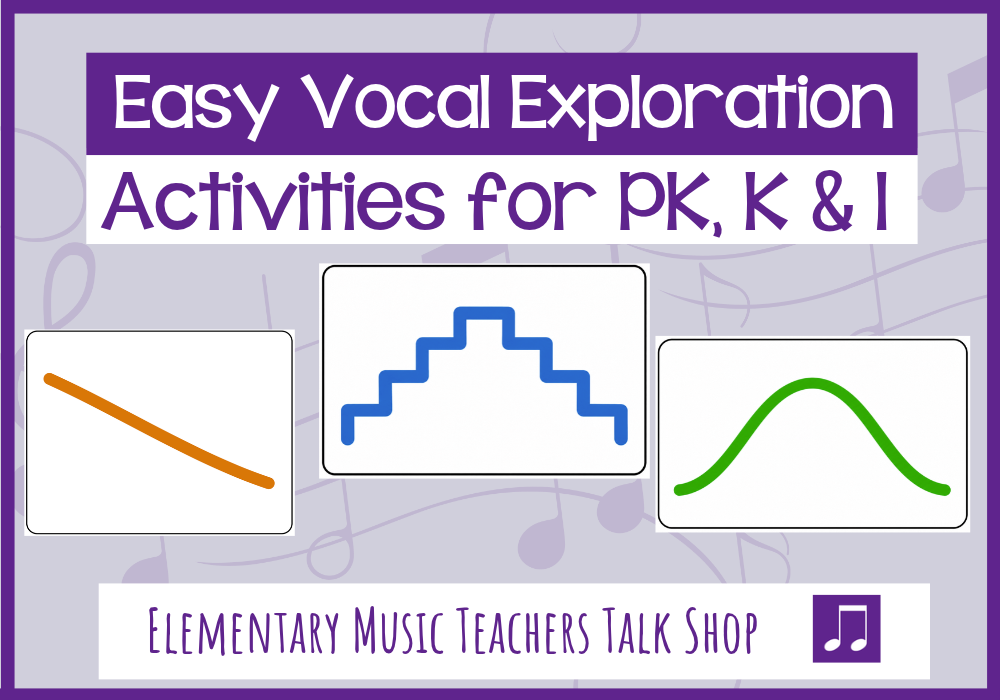
Vocal exploration cards show lines, shapes, or pictures that students can follow with their voices. Hold up a card with a hill, zigzag, loop, or spiral and have students sing the shape, moving their voices higher and lower as the line changes. You can also let students choose a card for the class to perform or place several cards in a row to create a longer vocal exploration sequence. Once the cards are prepared, they can be reused throughout the year for quick warm-ups. Here’s a set of FREE vocal exploration cards to add to your resources.
7. Scarf Voices
Give students lightweight scarves and have them move the scarves slowly through the air while making a vocal sound. When the scarf floats upward, their voices slide higher; when it falls, their voices slide lower. Students can experiment with circles, waves, and gentle swooping movements while matching the direction with their voices. This activity combines movement and vocal exploration and works especially well with students who enjoy hands-on learning.
Tips for Successful Vocal Exploration
Vocal exploration should feel playful and comfortable, not like a test. Encourage students to experiment with a variety of pitches and sounds, but remind them that they should never have to yell or strain their voices.
Keep activities short, especially with preschool and kindergarten students. A minute or two of vocal exploration at the beginning of class is often enough to get students using their voices and ready for singing.
Happy Teaching!
Elementary Music Teachers Talk Shop